
Dusit

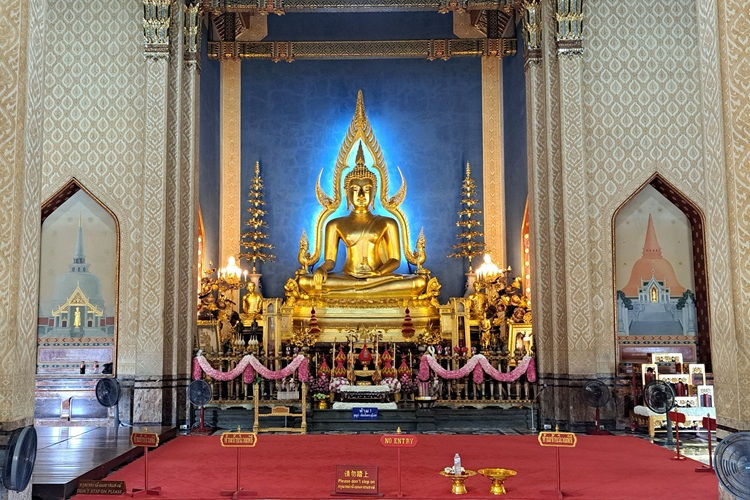

Wat Benchamabophit (1st Class Royal Temple)
Wat Benchamabophit Dusitwanaram Ratchaworawihan, popularly known as the Marble Temple, is a First-Class Royal Temple established during the reign of King Chulalongkorn (Rama V) as part of the development of Bangkok’s Dusit royal district. Designed by Prince Narisara Nuwattiwong, construction began in 1899 and incorporated large quantities of imported Italian Carrara marble, creating an exceptional fusion of traditional Siamese Buddhist architecture with Western materials and influences. The ubosot is entered through an elegant marble courtyard and features richly carved gables, gilded details and traditional Thai roof forms, while its cloister contains 52 Buddha images representing different Thai and regional artistic traditions, making it an important visual study of Buddhist iconography. The principal image, Phra Buddhajinaraja, is a replica of the revered Sukhothai-style Phra Buddha Chinnarat of Phitsanulok, with the ashes of King Rama V enshrined beneath its pedestal. Wat Benchamabophit is therefore significant not only as a functioning Theravada monastery, but as a national architectural symbol of how Thailand preserved its Buddhist identity while embracing modernity and international artistic influences.
Wat Ratchathiwat (2nd Class Royal Temple)
Wat Ratchathiwat Ratchaworawihan is a Second-Class Royal Temple with origins in the Ayutthaya period, when it was known as Wat Samor Rai. Its greatest historical significance emerged in the 19th century when Prince Mongkut, later King Rama IV, resided here during his monkhood and pursued a stricter approach to Buddhist study and monastic discipline. Wat Ratchathiwat is regarded as the first temple associated with the establishment of the Dhammayuttika Nikaya, the Buddhist reform movement that emphasised rigorous observance of the Vinaya and closer examination of the scriptures. During the reign of King Chulalongkorn, the temple’s ubosot was reconstructed under the direction of Prince Narisara Nuwattiwong, incorporating distinctive Khmer-inspired architectural forms and an unusual programme of murals depicting the Vessantara Jataka, painted in fresco with the involvement of Italian artist Carlo Rigoli. The temple consequently stands as an important monument to Thailand’s 19th-century Buddhist reform, royal intellectual life and the development of a more systematic approach to monastic education and practice.
Wat Intharawihan (3rd Class Royal Temple)
Wat Intharawihan is a Third-Class Royal Temple whose origins are traditionally traced to the late Ayutthaya period, with the temple originally known as Wat Rai Phrik before later becoming associated with the name of a Lao prince, Indharawihan. Its defining landmark is the immense Luang Pho To, a 32-metre standing Buddha whose construction began in 1867 under the leadership of Somdet Phra Buddhacarya (To Brahmaransi), one of the most revered monks of 19th-century Thailand. Completed over several decades, the gilded image became an important focus of popular devotion and is traditionally associated with the enshrinement of sacred Buddha relics within its crown. The temple’s historic ubosot, Buddhist imagery and continuing practices of chanting, merit-making and offerings reinforce its function as a living religious institution. Wat Intharawihan is especially significant because it connects the spiritual traditions of the Ayutthaya and Rattanakosin periods with the enduring popular devotion surrounding one of Thailand’s most influential monks and sacred Buddha images.
Wat Thewarat Golden Teak Museum
Located within Wat Thewarat Kunchorn Worawihan, the temple itself has Ayutthaya-period origins, was extensively restored under King Rama I and was elevated to royal-temple status during the reign of King Rama IV. Its present ubosot, reconstructed during the reign of King Rama III, houses the gilded Thewarat Phatimakorn, a Buddha image displaying characteristics of Dvaravati artistic traditions, while murals inside depict gatherings of celestial beings. The museum itself houses an impressive traditional golden teak building, preserving Buddhist antiquities, Thai cultural objects and wax figures representing all 19 Supreme Patriarchs of Thailand. The collections offer insight into Buddhist religious practice, monastic leadership, Thai traditions and material culture, while the building itself demonstrates the craftsmanship and architectural heritage of Thailand’s northern teak tradition. Together, the temple and museum form an important educational setting where Buddhist history, ecclesiastical heritage, royal traditions and traditional Thai craftsmanship are preserved for future generations.